Five management mistakes that quietly cap a spa or aesthetic clinic
A spa or aesthetic clinic can be fully booked and still barely worth selling. The treatments are rarely the problem; the way the business is run around them usually is. These are the five management mistakes that quietly cap what an owner-operated clinic earns now and what it is worth later, with the specific thing to check for each, and where to go to fix it properly.
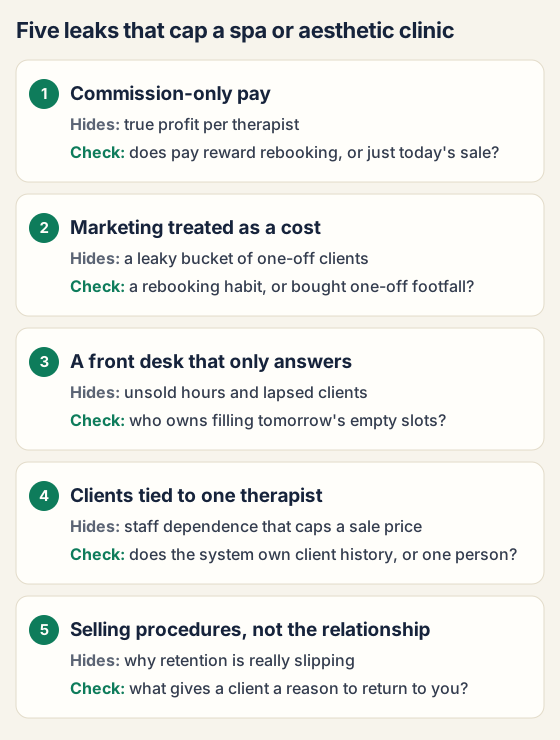
Mistake 1: paying therapists on commission alone
Commission-only pay feels fair and self-financing: staff earn when they sell, and quiet weeks cost you less. The trouble is what it quietly optimises for. When take-home depends entirely on what a therapist sells today, the incentive is to push the treatment that pays them most, not the one the client actually needs, and to compete with colleagues for the warm clients instead of building the book together.
What it hides: true profit per therapist. Tips and commission splits make take-home genuinely hard to see, so an underperforming column can be subsidised by your stars for years without anyone quantifying it.
What to check: whether your pay model rewards the outcome you actually want (clients who rebook and refer) or just the sale in front of them. A mix of a stable base plus a performance element usually holds the team together better than pure commission, though the right balance depends on your margins and local norms. The wider trade-offs are in hiring and keeping good staff.
Mistake 2: treating marketing as a cost, not an investment
Many owners look only at today's takings and cut marketing first when it is quiet. But a spa runs on a steady flow of new and returning clients, and that flow does not maintain itself. Spend that reliably brings clients back, automated rebooking reminders, a membership, a reason to return, is closer to an investment than an expense, because you already paid to win those clients once.
The aesthetics caveat, which matters: if you offer medical treatments, you cannot market them like a spa. In the UK, prescription-only medicines such as botulinum toxin (Botox and similar) must not be advertised to the public at all, under the Human Medicines Regulations and ASA rules. That means no promoting the named treatment, no "book your anti-wrinkle injection" ads or offers. What you can promote is your clinic, your practitioners' expertise, consultations, and the outcomes clients want. Get this wrong and the risk is not wasted spend, it is a ruling against you. Treat compliant advertising as part of the marketing, not an afterthought.
What to check: whether your marketing is building an asset (a growing, contactable client base and a rebooking habit) or just buying one-off footfall, and whether anything you publish about medical treatments would survive a regulator reading it. Turning one-off buyers into regulars is usually cheaper and more durable than topping up a leaky bucket: see recurring revenue for a local business.
Mistake 3: a front desk that only answers the phone
Hiring the reception role as "someone to take calls and bookings" wastes the single most commercial seat in the building. The front desk is where the diary gets filled or left half-empty, where a first impression is made, and where a client who drifted away is either won back or quietly lost.
What it hides: the bookings you never see. A passive desk does not chase the gaps, so off-peak room-hours and therapist-hours you have already paid for go out unsold, and clients who did not rebook simply never hear from you again. You do not get an alert when this happens; the diary just looks a bit thin.
What to check: whether someone actively owns filling tomorrow's empty slots, following up no-shows, and re-inviting clients who have not been in for a while. If the answer is "the diary fills itself," it does not. The mechanics of recovering that revenue are in how to reduce no-shows.
Mistake 4: a business built on people, not systems
In a lot of clinics every client is tied to one therapist. It feels like loyalty and it reads like risk, because when that person leaves, a chunk of the client book walks out with them. The knowledge of how each client likes things lives in one person's head, not in the business.
What it hides: owner and staff dependence, the quiet sale-killer. If clients book the therapist rather than the clinic, a buyer is not buying a business, they are buying a lease and some equipment, and they will price it that way. It also caps you day to day: the clinic grows to the edge of your personal capacity and stops.
What to check: whether a client's history, preferences and next recommended step live in your system or in a therapist's memory, and whether the brand, not the individual, owns the relationship. This is the real equity work, and it is the whole subject of make your business run without you.
Mistake 5: selling procedures, when clients came for how they feel
A client does not book a spa or a clinic purely for a procedure. They come to feel looked after, noticed, and confident about the result. Clinics that understand this sell the relationship and the outcome; the treatment is just how it gets delivered.
What it hides: why retention is really slipping. When the whole interaction is transactional, clients have no reason beyond price to come back, and price is the one thing a competitor can always undercut. In aesthetics especially, rebooking runs on trust and results, so a tracked recall for top-ups is worth more than most ad spend.
What to check: whether anything about a normal visit gives a client a reason to return to you specifically, a remembered preference, a genuine consultation, a follow-up that shows you noticed. Small, deliberate touches turn a procedure into something people come back for and recommend.
The thread running through all five
None of these are about the quality of your treatments, and that is the point. Each one is a leak between good work and a good business: pay that rewards the wrong thing, marketing cut at the wrong moment, a diary left to fill itself, a client book owned by staff, and a relationship treated as a transaction. Fix them and you are not just busier this month, you are building something that runs without you and holds its value.
That is the work Moonmoot is built to make visible. It reads your booking system, till and accounts, shows where the money is actually leaking, and points to the one move that matters next, without inventing a number. If you want to see what closing these leaks could change about what the business is worth, start with the business valuation calculator, or pressure-test a pricing or staffing change first with the break-even calculator.