Off the clipboard: digitising the paperwork that runs a bakery or cafe
Most bakeries and cafes still run on paper: recipes taped to the wall, a bake plan on a whiteboard, a stock count on a clipboard, a temperature log by the fridge. It is not because going digital is expensive any more; it stopped being expensive. It is because nobody has decided what to move first. Here is what pays back quickest, what to buy versus build, and what becomes possible once the paper is data.
Digital stopped being the expensive part
The barrier used to be real. Software cost money, the hardware to run it cost more, and anything bespoke meant a developer and a budget most owners did not have. None of that is true now. Consumer tablets are cheap and you only need a few. Off-the-shelf tools cover the common jobs well. And for the handful of things no product quite fits, AI has made building a simple internal tool cheaper and faster than it has ever been. The question is no longer whether you can afford to digitise, it is deciding what to move first.
Start with the physical layer: a few tablets on the floor
Papers curling on the walls (recipes, prep lists, the cleaning rota) are how most kitchens still run. A few cheap tablets, one per section, quietly change that. A baker follows the recipe on a screen at the bench instead of a laminated sheet by the oven, and the version is always the current one. But the tablet is not just a recipe holder. It is the terminal every other digital process runs through: the stock count, the waste log, the temperature check, the production sheet. Get the screens in place and everything else has somewhere to live.
The paperwork worth moving first
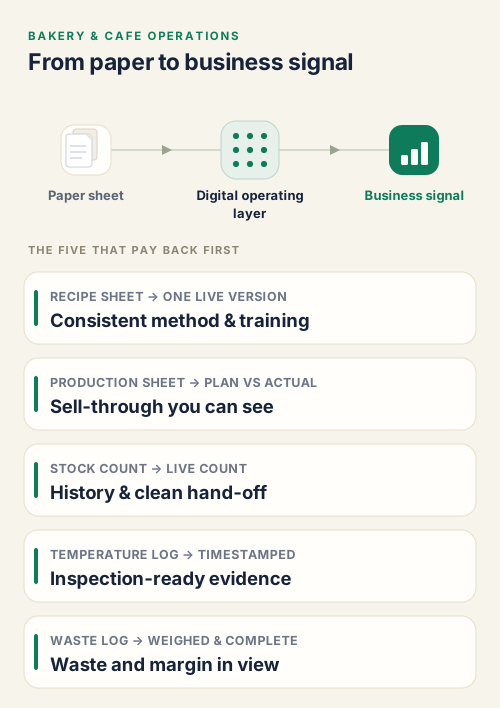
Not everything needs to move at once. These are the sheets that pay back quickest in a bakery or cafe, and what each one unlocks once it is data rather than paper:
- Recipe and process sheets. On paper, a recipe change means reprinting and hoping every site swaps the sheet. Digital, you update it once and every bench sees the new version instantly, wherever you happen to be when the idea lands. It also makes training, onboarding and checking a new starter has actually learned the method far simpler: everyone works from the same screen, and you can see who has been through what rather than assume it. And it is how method stops living only in the head baker's memory, which is the first step away from being one resignation away from losing your standards.
- Production and order sheets. For a shop that bakes to a display counter rather than to order, the day's bake plan is the biggest financial decision in the building, and it is usually made on a whiteboard from habit. Digital, you can plan against what actually sold last week instead of what you baked, and watch sell-through (the share of what you made that sold at full price) rather than guess at it.
- Stock and inventory checks. A paper count is out of date the moment it is written and never gets analysed. A live count tied to what you actually use flags reorders before you run out and shows the cash sitting dead on the shelf. It also drops straight into your accountant's hands at month or year end instead of being typed up from a smudged sheet, and it leaves a history you can trace back: what you held, when, and how it moved.
- Food-safety and temperature logs. Legally required, and still almost universally kept on a clipboard by the fridge. Digital, every check is timestamped and searchable, which is the difference between a stressful inspection and a boring one, and it is exactly the evidence a buyer's due diligence will ask to see.
- Waste log. At bakery and cafe margins the bin at close often holds the day's profit, yet the waste sheet, where one exists at all, rarely gets read. Weighing what you throw, not just noting that you threw something, is what makes it useful. Logged properly and completely it becomes a number you can act on: which lines to bake less of, where the over-pour is, what to reprice. A full waste record says a lot about how a business is run, and trimming waste a few points usually does more for gross margin than a price rise.
Buy what already exists, build only what is truly yours
Two rules keep this cheap and sane. Buy the common jobs off the shelf: staff scheduling and shift swaps, for example, are a solved problem, handled well by apps like Zoho Shifts, Deputy or Planday, and there is no reason to build your own. The same goes for your till, card payments and basic stock. Getting the rota right is as much about labour cost as software, and that side is covered in staff scheduling that stops losing money.
Build only the handful of things that are genuinely specific to how you work: a production sheet shaped to your display counter, a waste log built around your actual bakes, a process checklist only your kitchen needs. These used to be the excuse to stay on paper, because bespoke meant a developer and a bill. With AI, putting together a simple internal tool like this is now realistic at a fraction of the old cost and time. Keep it small, solve one real problem, and resist rebuilding what you could have bought.
What going digital actually unlocks
The point is not tidiness, it is what becomes possible once the paper is data. Four things paper can never give you:
- Collaboration across sites and shifts. One recipe, one standard, one version everyone works from, whether you run a single counter or five.
- Continuous improvement. A change you make today (a new method, a smaller bake, a repriced line) is measured against what came before, instead of disappearing into memory.
- Cross-analysis. Waste, sell-through, cost per bake and labour hours stop being separate sheets and start being one picture, which is where the real leaks show up.
- Scale and value. Well-structured digital records, feeding the right system, are worth more than the paper they replace. A business whose operations are legible scales more cleanly to a second site, and stands up far better when someone is deciding whether to invest in it or buy it. Paper does not travel; structured data does.
That last point is where Moonmoot fits, and it is worth being precise about how. Moonmoot is not your recipe app or your stock counter; those are the tools above. What it does is read across the systems you already use (your till, bank and accounts) and turn them into the few numbers that actually decide the month, without inventing any of them. Digitising your operations is what gives it something real to read. Once it can, start with the numbers to watch weekly. And if you are thinking further ahead, a business that runs on systems rather than paper and memory is easier to step back from (owner dependence is the quiet sale-killer) and worth more when you come to sell, which the business valuation calculator will put a figure on.